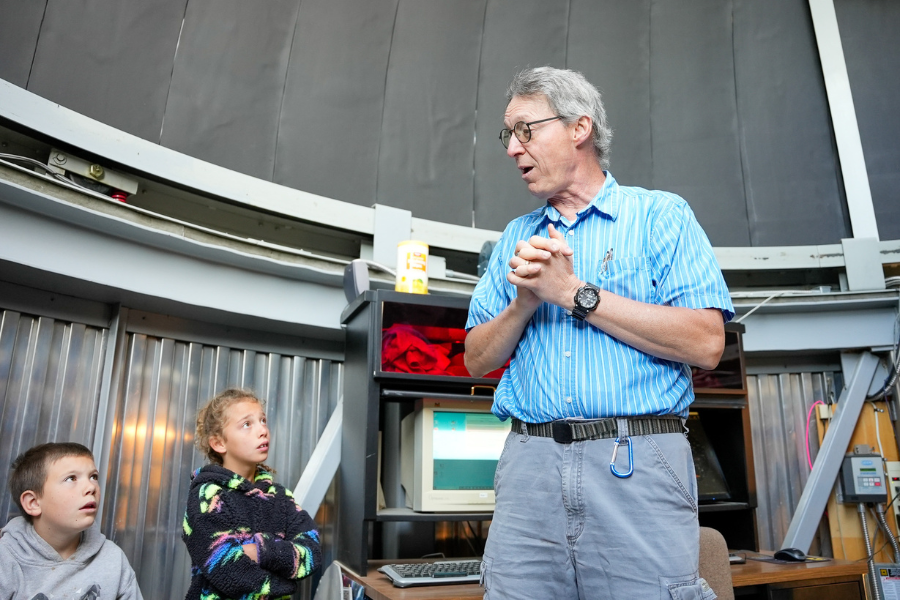
Telescopes: What are They?
Join our Observatory Coordinator for “Telescopes: What Are They?” — an engaging lecture that introduces your students to the fascinating world of telescopes and astronomy. Students will learn about different types of telescopes, how they work, and the incredible objects they allow us to observe in space. Through interactive discussion and exploration, this program helps students better understand the tools astronomers use to study the universe around us.
Book this activity
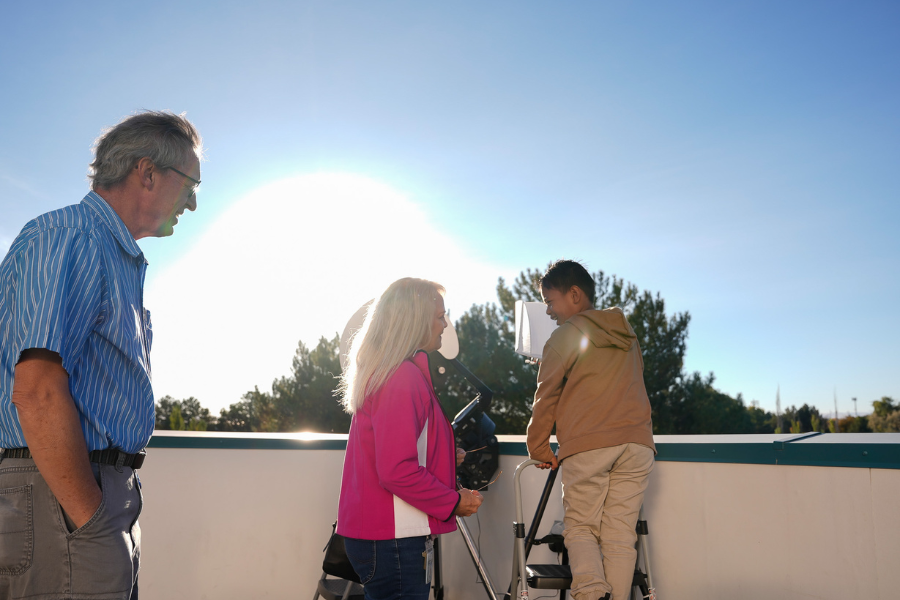
Solar Viewing
Experience the wonders of the daytime sky during Solar Viewing at the observatory! Using specialized solar filters, visitors can safely observe the Sun’s boiling surface, powerful gaseous eruptions, and other fascinating solar activity in real time. Depending on the conditions, guests may also catch glimpses of the Moon, bright stars, and even an occasional planet — all during daylight hours. This unique program offers an exciting opportunity to explore astronomy beyond the nighttime sky.
Book this activity
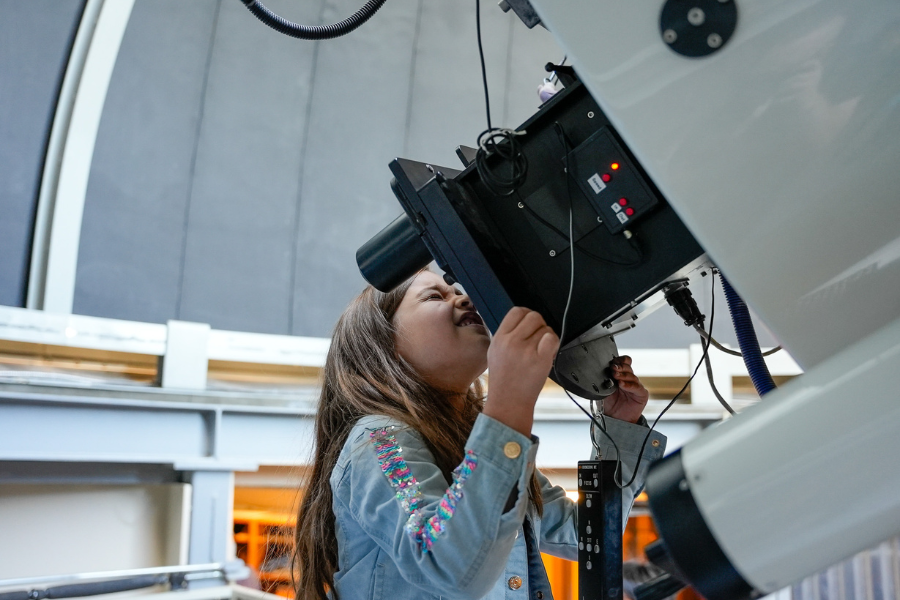
Nighttime Viewing
Experience the night sky like never before during Nighttime Viewing at the observatory. Any observatory program taking place outside of regular museum hours is considered a nighttime viewing experience, giving visitors the opportunity to explore the universe after dark through the Norman Herrett 24" telescope. Guests may observe stunning lunar craters, sparkling star clusters, glowing clouds of gas, distant galaxies, colorful stars, multiple star systems, and more.
Book this activity
The observatory dome and solar telescopes cannot operate in incement eather, including cloudy conditions. In this event, the program will include a demonstration of the 24" telescope without actual viewing through the telescopes.
The Centennial Observatory Features:
- The Normal Herrett 24" (0.6m), computer-controlled reflector telescopes, with full wheelchair access.
- Solar filtered telescopes for safe, close-up views of the Sun.
- A 20' (6m) motorized dome.